
Home & Clinic Sensory Swing and Mounting Guide
Choose an indoor sensory swing by checking your ceiling joist, room clearance, and maker load rating first. Plan at least 6 ft by 6 ft of open floor space around the swing path. Pair a compression sling or pod swing with a washable crash pad or gym mat underneath.
Match Your Swing to Ceiling Height and Structure
Start with the structure above your ceiling drywall. Do not start with fabric color. Most homes use solid wood ceiling joists rated for downward loads. Pediatric clinics often install commercial steel beams or rated eye-bolts. Harkla publishes indoor swing specs with mounting hardware and stretch fabric details[1]. Fun and Function lists soft taco swings, pod swings, and clinic suspension hardware for daily use[2].
Measure three numbers before you order. First, measure floor-to-ceiling height in inches. Second, measure open swing arc clearance in feet. Third, locate the center width of your ceiling joist. Most home ceilings measure 96 in (8 ft) or 108 in (9 ft) high. A compression sling stretches downward when a child sits inside. A low ceiling needs a shorter daisy chain so the sling stays clear of the floor. Place a dedicated crash pad or gym mat under the swing zone[1].
Check the maker load rating in lbs before installation. Dynamic swinging multiplies downward force above standing body weight. Leave a wide margin below the published hardware limit[2]. Unclip the swing when no adult is supervising the room. Store extra carabiners and daisy chains in a high bin out of reach.
Compare the Four Indoor Sensory Swing Styles
Specialty pediatric makers build indoor swings in four core mechanical styles. Each style holds body weight in a different way. Each style also needs its own floor clearance and mounting setup.
| Swing Style | Structure | Mount Type | Clearance | Best Setting |
|---|---|---|---|---|
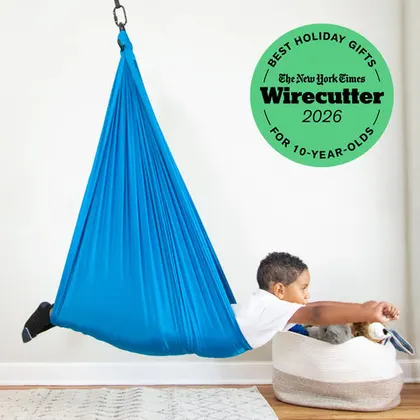
| Compression Sling | Stretch cotton or nylon loop | 1-point ceiling swivel | 6 ft x 6 ft | Home and clinic |
| Pod Swing | Canvas shell with cushion | 1-point swivel + chain | 5 ft x 5 ft | Bedroom corner |
| Soft Taco / Bolster | Padded cylinder or sling | 1-point or 2-point | 7 ft x 7 ft | Clinic and school |
| Free-Standing Frame | Steel A-frame stand | No ceiling drilling | 7 ft x 8 ft | Rentals and condos |
Compression slings fold flat when unclipped from the ceiling hook. That helps families who share a living room with adult seating. Pod swings include an internal cushion that holds a seated shape. Parents often pair pod swings with weighted lap pads or visual timers[6]. Commercial therapy rooms combine swings with thick pads from Fun and Function or Airex mats from Power Systems[2][3].
Soft taco and bolster swings need extra clear radius around walls. Two-point suspension keeps the swing moving forward and backward on one clean track. Single-point suspension allows 360-degree spinning when paired with a ball-bearing swivel. Ask your child's therapist which motion plane fits your room layout best.
Ceiling Hardware, Joists, and Monthly Wear Checks
Never anchor a swing hook into drywall alone. Never mount into a decorative hollow beam. Use a deep stud finder to mark the center of a solid 2x6 or 2x8 wood joist. Drill a clean pilot hole that matches the maker lag-bolt chart. Skipping the pilot hole can split the wood joist under load. Harkla ships stainless hardware kits with select indoor swings[1]. Clinics often add rated rotational swivels and steel safety cables[2].
Inspect two wear points once each month. First, check metal-on-metal contact at the carabiner eye. Metal rubbing against metal creates gray dust over months of spinning. A sealed ball-bearing swivel or nylon sleeve stops metal wear. Second, inspect fabric stitching near the top knot or grommet after every wash. Replace any worn rope or frayed sling immediately.
Renters often cannot drill into ceiling joists. A freestanding steel sensory frame solves that limit with zero ceiling holes. Floor-based movement gear is another strong no-drill option. Consider Stapelstein stepping stones molded from lightweight foam or a modular Nugget play couch[7][4].
Hardware Checklist and Floor Protection Specs
| Component | Spec to Check | Home Setup | Clinic Setup |
|---|---|---|---|
| Ceiling Anchor | Solid joist or steel beam | Lag-bolt eye or hanger | Beam clamp + safety cable |
| Swivel Device | Ball-bearing rating in lbs | Needed for spinning | Standard for multi-use |
| Height Chain | Stitched nylon loops | Fits 8 ft to 10 ft ceilings | Fast clip height swap |
| Floor Mat | Foam thickness and wash care | Washable crash pad | Wipe-clean vinyl mat |
A washable crash pad under the swing pads dismounts and doubles as a floor landing zone[1]. Families who want living-room seating often add Nugget or Figgy foam cushions nearby. Figgy offers waterproof liners that protect open-cell foam from spills[4][5]. Clinic directors pair suspended zones with Guidecraft birch storage so swings stay off the floor between sessions[11]. Keep Harkla weighted blankets folded on low shelves for quiet post-swing cooldowns[1].
Four Common Swing Installation Mistakes
- Mounting too close to walls: Leave 36 in of open space from the outer swing arc to walls, windows, or shelves.
- Skipping the wood pilot hole: Driving a thick lag bolt without a pilot hole splits ceiling joists.
- Ignoring dynamic load: Pumping multiplies force above standing body weight. Stay well under the maker lbs limit[2].
- Skipping monthly hardware checks: Check carabiners, swivels, and stitched loops every 30 days for wear[1].
Build a Complete Calm Corner Around Your Swing
Many homes and schools group a swing with one quiet auditory tool and one visual timer. Puro Sound Labs kids headphones cap audio at 85 dB to protect young ears[8]. A Time Timer 30-minute or 60-minute visual disk shows how much swing time remains[6]. Clear visual cues reduce transition friction before dinner or homework.
Desk movement tools also pair cleanly with suspended play. Bouncyband chair bands loop across front chair legs for quiet foot movement[9]. Special Supplies cushioned foam pencil grips support comfortable hand grip during table tasks[10]. Sensory Goods builds custom cotton weighted blankets in clear sizes like 48 in by 30 in and 52 in by 40 in[12]. Check every maker dimension, weight limit, and wash label before you order. Accurate measurements ensure your swing zone fits cleanly on day one.
Verified Picks From Live Store Catalogs
Pick rule: Verified indoor swings, suspension hardware, and landing mats in stock today with dated USD store prices.
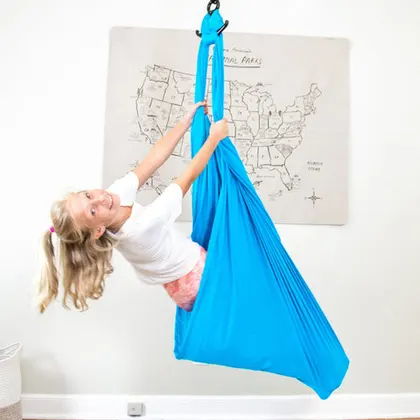
Compression Swing Replacement Fabric - No Hardware Included
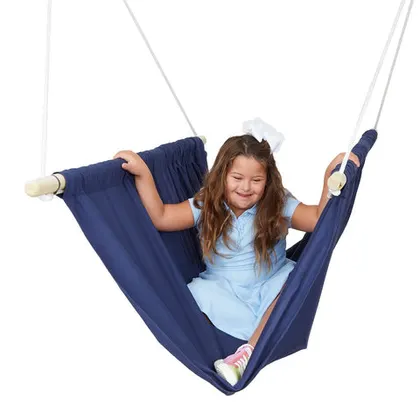
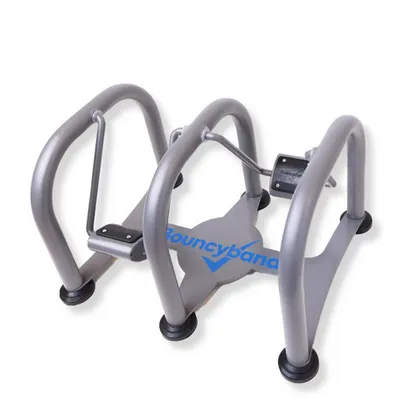
Dual Pedal Portable Foot Swing by Bouncyband®
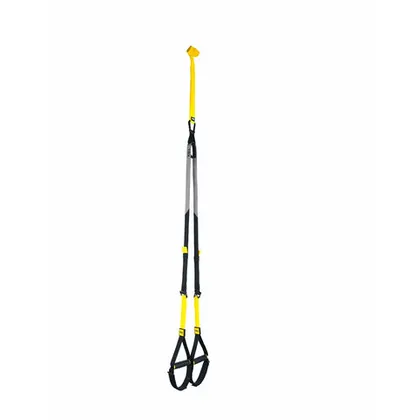
TRX® Commercial Suspension Trainer
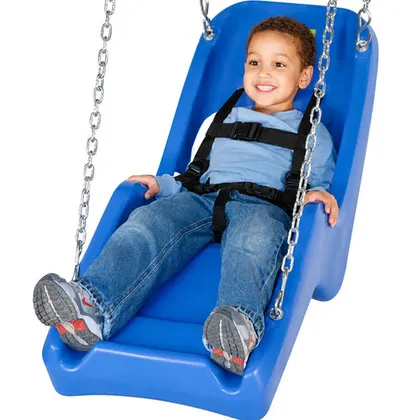
JennSwing® ADA Swing Seat
Common Buyer Questions
What ceiling structure do I need before installing an indoor sensory swing?
You need a solid wood ceiling joist, exposed timber beam, or rated steel beam. Never anchor a swing into drywall alone.
What is the difference between a compression sling and a pod swing?
A compression sling wraps the body in stretch fabric and folds flat. A pod swing uses a canvas shell with an internal cushion.
Do I need a rotational swivel device for a home sensory swing?
Yes. A sealed ball-bearing swivel stops rope twist and fabric wear during spinning. It is ideal for single-point ceiling mounts.
How much floor clearance should I leave around a suspended swing?
Keep at least 6 ft by 6 ft of open floor space. Leave 36 in between the outer swing arc and any hard wall.
Can I use a sensory swing without drilling into a ceiling joist?
Yes. Use a freestanding steel indoor swing frame with no drilling, or pick floor gear like stepping stones and play couches.
Sources & Maker Specifications
- Harkla: Harkla Sensory Swings, Crash Pads & Weighted Gear Specifications. Read 2026-11-19.
- Fun and Function: Fun and Function Home & Clinic Sensory Equipment Specifications. Read 2026-11-19.
- Power Systems: Power Systems Commercial Therapy Balls, Balance & Gym Mats Specifications. Read 2026-11-19.
- Nugget: Nugget Modular Play Couch Specifications. Read 2026-11-19.
- Figgy: Figgy Play Couch Specifications. Read 2026-11-19.
- Time Timer: Time Timer Visual Countdown Timer Specifications. Read 2026-11-19.
- Stapelstein: Stapelstein Stepping Stones & Balance Board Specifications. Read 2026-11-19.
- Puro Sound Labs: Puro Sound Labs Kids Volume-Limited Headphones & Earmuffs Specifications. Read 2026-11-19.
- Bouncyband: Bouncyband Active Seating & Classroom Gear Specifications. Read 2026-11-19.
- Special Supplies: Special Supplies Stepping Stones, Swings & Fine-Motor Specifications. Read 2026-11-19.
- Guidecraft: Guidecraft Clinic & Classroom Sensory Furniture Specifications. Read 2026-11-19.
- Sensory Goods: Sensory Goods Weighted Blankets & Lap Pads Specifications. Read 2026-11-19.